Frank and Regine

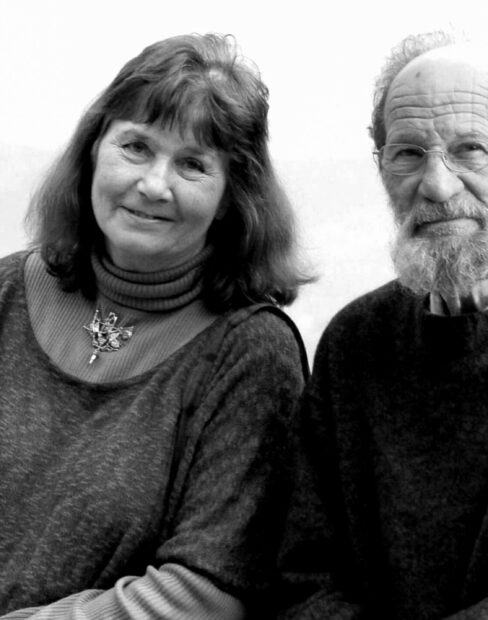
Frank and Regine Juhls: A Life’s Work of Art, Culture, and Craftsmanship Together, Frank and Regine Juhls created a unique artistic universe in the heart of Kautokeino. With a foundation in silversmithing, architecture, and painting, they built Juhls Silvergallery – a place where tradition meets modernism, and where nature and art merge. Their life’s work became a synthesis of respect for a nomadic way of life and a broader artistic expression, leaving a lasting mark on Northern Norway and far beyond its borders.


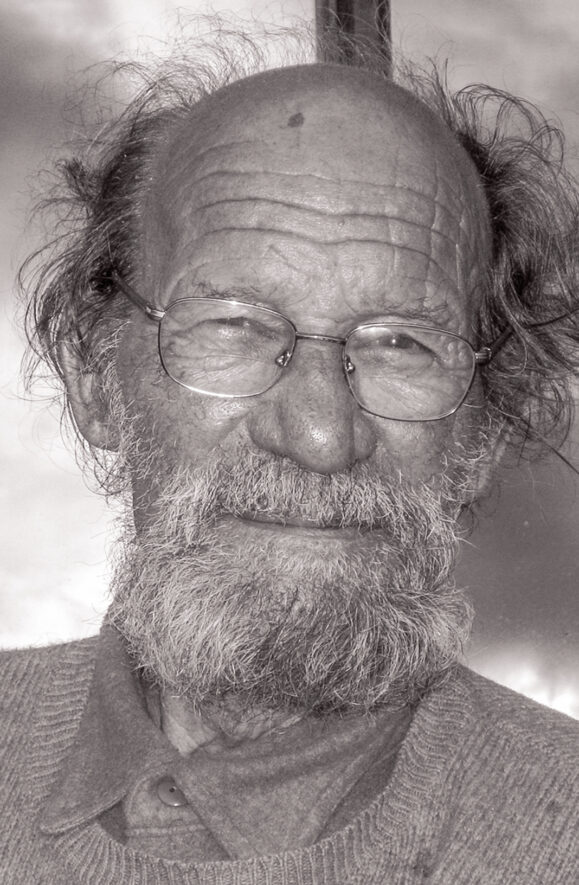
Frank

Frank Juhls was born on May 10. 1931, in Denmark. From an early age, he showed a clear artistic sensibility. He came from a family of craftsmen and trained as a painter, specializing in sign painting – a discipline that can be compared to today’s graphic design.

During his journeyman years, he gradually moved northwards, and in 1951 he arrived in Kautokeino – a place that would become decisive for both his life and his work.

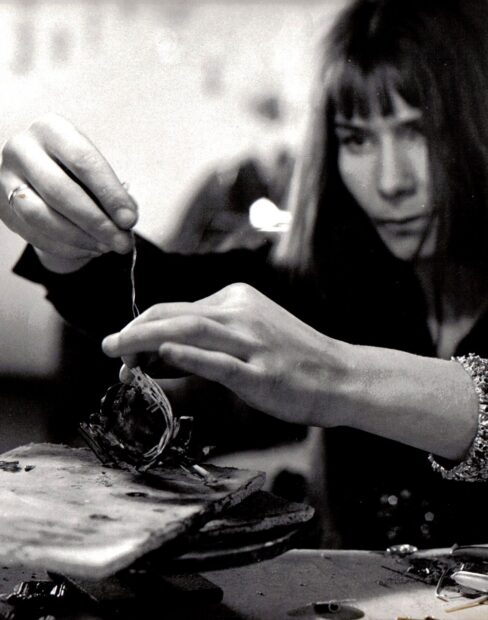
Although Frank began as a house and sign painter, there was always a strong drive in him to work artistically. In the late 1950s, he and Regine travelled to Copenhagen, where they learned the craft of silversmithing. In doing so, they became the first silversmiths in Finnmark, laying the foundation for a new craft tradition in the north. For Frank, however, it was the visual and spatial work that remained central.

At the same time, he developed his work as a painter. His expression moved from the naturalistic towards the increasingly abstract. His working process was intuitive and direct – rapid and focused, where the images either held or they did not. For Frank, painting was not about analysis or explanation, but about creating an immediate experience, without titles or guidance for the viewer.

This approach also shaped his work with space and architecture. In developing the buildings at Juhls Silvergallery, he worked without formal architectural education, guided instead by a strong intuitive understanding of space, proportion, and relationships. The result is an architecture that appears both coherent and precise, with a clear connection to the surrounding landscape.

In later years, he also worked with mosaic, including the so-called “golden egg” in front of the building. These works stand as distinct, site-specific expressions, closely connected to the architecture.

Frank Juhls believed that art should stand without explanation. He gave no titles to his works, maintaining that the experience should not be guided by words. The works were meant to meet the viewer directly, allowing for a personal interpretation.

His work spans several forms of expression, yet is held together by a consistent approach: a search for form, rhythm, and coherence, developed through experience and a strong visual sensibility.

Frank Juhls’ art and architecture remain present in Kautokeino. Together, they form a life’s work shaped by a continuous exploration of expression, materials, and space.

Frank Juhls passed away on February 4, 2020.

Regine

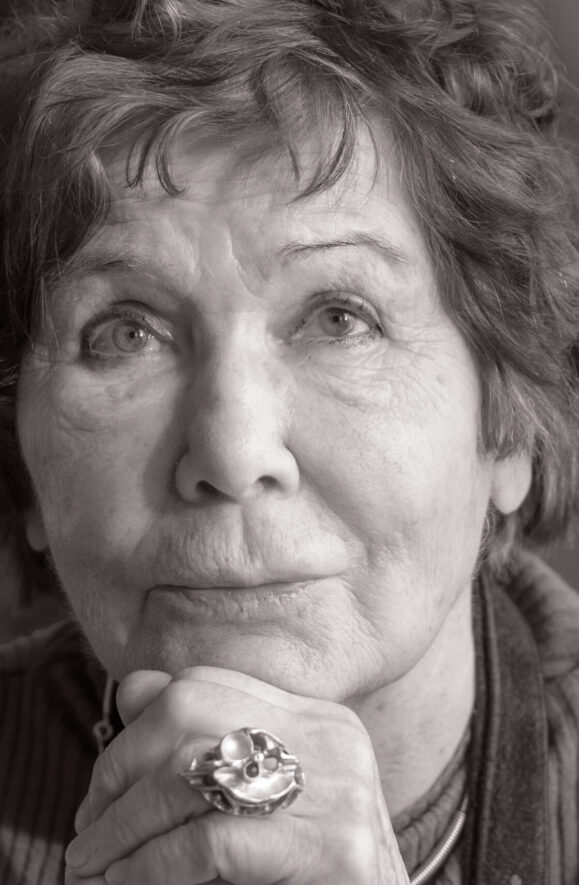
Regine Juhls was born in 1939 in East Prussia (now Poland), and grew up as a refugee in West Germany. Her early experiences gave rise to a lasting sense of movement and a desire for a life closer to nature. As a young woman, she developed a strong interest in the North – through literature, art, and polar history. Inspired by figures such as Thor Heyerdahl, Helge Ingstad, Knut Hamsun, and Edvard Munch, a clear direction emerged: she had to go to Norway.

In 1957, she arrived in Kautokeino. She had set out to spend a year in solitude, cold, and darkness. Here, she met Frank Juhls, and together they established a shared life and working partnership that would develop over several decades.

In the early 1960s, Regine began to explore silver as an artistic material. The craft became a means of developing a personal visual language, grounded in direct experience of nature – not as representation, but as movement, structure, and rhythm.

Her forms are abstract and organic. Motifs emerge intuitively, drawing on plants, surfaces, and traces in the landscape. The expression is concentrated and tactile, with a clear attention to detail and relationships.

The Tundra collection holds a central place in her work. It developed over time as a personal body of work, shaped by experiences of the plateau and the long winter months. The tension between darkness and the brief, intense flowering is reflected in the expression – between density and openness, the coarse and the refined.

Her work represented a significant development within Norwegian jewelry, with a visual language that departed from established traditions. Today, the Tundra collection is regarded as a modern classic within Nordic jewelry. Through Regine Juhls’ work, Norwegian and Scandinavian jewelry has been presented in numerous international contexts.

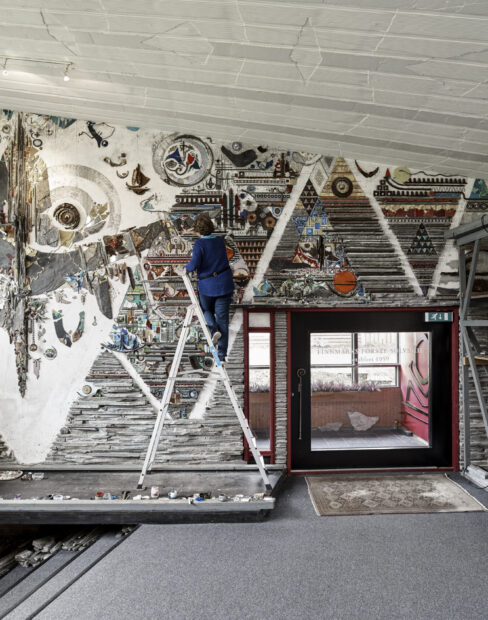
Alongside her jewelry, Regine has worked with larger surfaces and continuous visual expressions. This is particularly evident in her long-term work on a monumental mosaic wall at Juhls Silvergallery.

The mosaic wall is a life project, developed over several decades. Here, she works directly in the material, piece by piece, in an ongoing process without a fixed conclusion. Motifs, figures, and ornamental structures emerge as a continuous narrative, where elements from nature, myth, and lived experience are interwoven.

The work is physically demanding and at the same time intuitive, reflecting the same open approach that characterizes her jewelry. The wall appears as a unified visual field – open, complex, and in constant development.

Through her work, Regine Juhls has developed an independent artistic expression, closely connected to life and landscape in Kautokeino. Her works form part of the overall environment of Juhls Silvergallery, while also standing as distinct and consistent artistic statements.

She remains active, and the work on the mosaic wall continues – an ongoing piece shaped by time, experience, and a continuous exploration of form and expression.
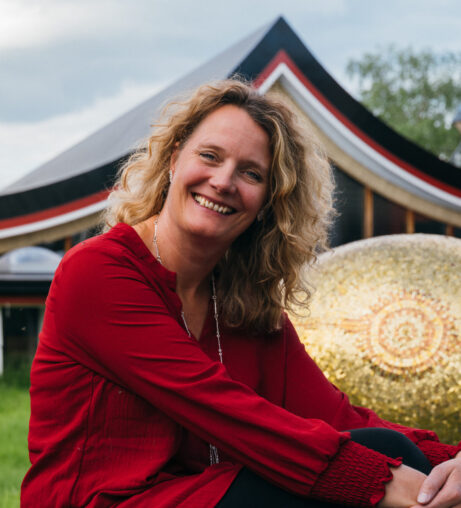
Sunniva Juhls has carried forward the legacy of her parents, Frank and Regine Juhls, as the head of Juhls Silvergallery. She trained as a silversmith in Germany in the 1990s, and has since developed her own jewelry collection, known for its modern and architectural expression.

She regards it as a life’s task to carry forward what her parents created,  and to preserve the personal spirit that defines the place.

Sunniva is committed to preserving traditions, particularly within Sámi silver for traditional dress, while allowing the work to evolve in dialogue with the present and with the perspectives of Sámi youth today.

Today, Sunniva leads the work at the gallery and workshop in Kautokeino, which provides a workplace for around 15 people. The main focus is on sustainability, durability, and ethical production. All work is carried out in the workshop in Kautokeino, where a high level of craftsmanship is maintained. She takes a clear stand against outsourcing production to low-cost countries, emphasizing full transparency in all production processes. This helps ensure that both cultural and craft traditions remain rooted locally, and that the quality and integrity of the work are upheld.